

Agriculture students have a structural advantage in scholarship applications that most do not fully use. Food security, water management, sustainable farming, and rural development are explicit funding priorities for nearly every major government scholarship program DAAD, Australia Awards, MEXT, CSC, Commonwealth, and Erasmus Mundus all include agriculture and food systems in their stated development goals.
The development story is easy to write for agriculture students from developing countries. The problems are specific, the data is published, and the connection between a postgraduate degree in plant pathology, soil science, or food technology and a real agricultural challenge at home is direct and credible.
This guide covers the best fully funded scholarships for agriculture, food science, and related fields in 2026.
Top Scholarships for Agriculture Students 2026
1. Wageningen University Excellence Scholarship — Netherlands
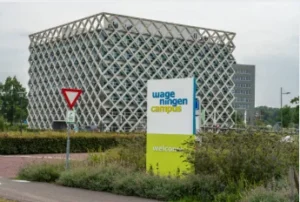
Wageningen University in the Netherlands is ranked the world’s number one university for agriculture and food sciences and it has a dedicated scholarship program for international Master’s students.
The Wageningen Excellence Scholarship (WES) covers full tuition for the Master’s program and provides a monthly stipend of 500 euros. For agriculture students, there is no better institutional match globally.
Wageningen’s programs relevant to agriculture students: Plant Sciences, Food Technology, Soil Geography and Landscape, Environmental Sciences, International Land and Water Management, Aquaculture and Fisheries, Animal Sciences, and Nutrition and Health.
The scholarship is competitive typically awarded to the top 10–15% of international applicants. A strong academic record and a well-articulated reason for choosing Wageningen specifically, connected to your research interest or home country’s agricultural challenge, is the core of a competitive application.
IELTS: 6.5 / TOEFL 90 Deadline: January 2027 (scholarship) admission closes February 2027
2. DAAD Scholarship — Germany
German agricultural research institutions are among the strongest in the world particularly in plant biotechnology, food safety, precision agriculture, and agricultural economics. Hohenheim University near Stuttgart is Germany’s leading agricultural university. The University of Bonn has a strong development economics and food security research tradition. Georg-August University Göttingen is well-regarded in tropical agriculture.
DAAD funds Master’s and PhD programs at German agricultural universities with zero tuition and 850 euros per month for Master’s students. MOI Certificate is accepted in place of IELTS.
For agriculture students from developing countries, the DAAD motivation letter almost writes itself Pakistan’s water stress and wheat yield decline, Bangladesh’s salinity intrusion in coastal agricultural land, Nigeria’s post-harvest loss crisis, Kenya’s soil degradation. These are specific, documented problems that specific German research groups are working on. The connection between your proposed degree and a German research group addressing your home country’s specific challenge is the core of a competitive DAAD agriculture application.
IELTS: MOI Certificate accepted Deadline: November 15, 2026
3. MEXT Scholarship — Japan
Japan has exceptional agricultural research programs particularly in rice genetics, precision agriculture, food processing, and biotechnology. Nagoya University, Hokkaido University, and Kyushu University all have strong agriculture faculties accessible through MEXT.
Hokkaido University’s Graduate School of Agriculture is Japan’s largest and most research-active agriculture faculty with strong programs in animal science, crop science, forest science, and applied biosciences.
For MEXT, contacting a Japanese professor before applying is essential. Agriculture professors at Japanese national universities have research grants and are often willing to host international students whose research connects to their work. A supervisor who has expressed interest in your research is close to essential for a competitive MEXT application.
IELTS: Not required Stipend: Approximately 950 USD per month Deadline: April–May 2026
4. CSC China Scholarship — Agriculture Programs
China has invested heavily in agricultural science research over the past 15 years and Chinese agricultural universities now rank among the world’s strongest for crop genetics, soil science, and food technology.
China Agricultural University (CAU), Nanjing Agricultural University, Huazhong Agricultural University, and Northwest A&F University are the leading institutions. All are in the CSC scholarship network.
For agriculture students, CSC is particularly accessible no IELTS requirement (MOI Certificate accepted), no universal minimum GPA, and full tuition plus free accommodation. The study plan needs to connect your proposed research to your home country’s agricultural challenges and to a specific Chinese university’s research program.
IELTS: MOI Certificate accepted Deadline: February–May 2027
5. Australia Awards — Agriculture and Rural Development
The Australia has strong agricultural research institutions the University of Queensland, University of Adelaide, University of Western Australia, and Charles Sturt University all have highly regarded agriculture and food science programs.
Australia Awards prioritizes agriculture, food security, and natural resource management applicants from eligible developing countries. For students from Pacific Island nations, Southeast Asia, and several African countries, agriculture scholarship applications to Australia Awards are among the most straightforward to build the development story is direct and the institutional match is strong.
Australia’s agricultural research strengths dryland farming, precision agriculture, rangeland management, and food safety are directly relevant to many developing country agricultural challenges.
IELTS: 6.5 minimum Deadline: April–May 2027
6. Erasmus Mundus — Agricultural and Environmental Programs
Several Erasmus Mundus programs are directly relevant to agriculture students.
IMRD (International Master of Rural Development): A flagship Erasmus Mundus program for rural development and agricultural policy students. Multiple European partner universities including Ghent, Agrocampus Ouest (France), Humboldt Berlin, and others. Full tuition, 1,400 euros per month, travel costs.
IMLEX (Intelligent Field Robotic Systems): Relevant for precision agriculture and agricultural technology students.
EMJMD in Food Safety: Covers food microbiology, food chemistry, and food safety management across European universities.
Water and Coastal Management: Relevant for students in irrigation, water management, and agricultural hydrology.
No work experience required for most Erasmus programs. IELTS: 6.5 for most consortiums Deadline: January–March 2026 (varies by consortium)
7. Commonwealth Scholarship — UK Agricultural Universities
Commonwealth scholarships fund agriculture and food science programs at UK universities. Rothamsted Research (UK), Harper Adams University, and the agricultural faculties at Newcastle, Reading, and Nottingham are among the strongest options.
For Commonwealth agriculture applications, the development impact statement should connect the proposed degree to a specific crop, livestock, or land management challenge in the applicant’s home country with data. Not “agriculture is important for my country’s economy” but “Pakistan loses an estimated 30–40% of its post-harvest mango crop to fungal spoilage during the supply chain, a problem that costs smallholder farmers in Sindh approximately PKR 8 billion annually.” That sentence names a crop, a loss mechanism, a geography, and a cost.
IELTS: 6.5 Deadline: October–November 2026
Why Agriculture Students Write Strong Scholarship Applications
Agriculture is unusual among academic fields in that the real-world problems driving the research are highly specific, well-documented, and directly connected to the lives of identifiable populations.
A computer science PhD student sometimes struggles to connect their research on algorithm efficiency to human welfare in a specific community. An agriculture student researching drought-resistant wheat varieties can point to the 80 million smallholder wheat farmers in South Asia who will benefit if the research succeeds, cite specific yield decline data from PARC or ICRISAT, and name the provincial agricultural extension service they will return to after graduating.
The specificity that scholarship committees are looking for in development impact statements comes naturally to agriculture students because the development impact of agricultural research is generally concrete, measurable, and tied to real food systems that real people depend on.
Free Tools
- Free SOP Generator
- Free Motivation Letter Generator
- Free Research Proposal Generator
- Free CV Builder
- Free MOI Certificate Generator
- Free Reference Letter Generator
- Free IELTS and TOEFL Practice
FAQ
Which is the best scholarship for agriculture students?
Wageningen WES for Netherlands study in the world’s top agriculture university. DAAD for Germany. MEXT for Japan. CSC for China no IELTS, no GPA minimum, well-funded Chinese agricultural universities. Australia Awards for Australia.
Which university is best for agriculture scholarships?
Wageningen University (Netherlands) is ranked world number one in agriculture. Other strong options: Hohenheim (Germany), Hokkaido (Japan), UC Davis (USA PhD programs), University of Queensland (Australia), and China Agricultural University (China).
Do agriculture scholarships require IELTS?
MEXT Japan: no. CSC China: no (MOI Certificate accepted). DAAD: MOI Certificate accepted. Australia Awards, Commonwealth, Chevening: IELTS 6.5 required. Erasmus Mundus: 6.5 for most programs.
Can I get a scholarship for agricultural engineering?
Yes — DAAD, GKS, MEXT, and Erasmus Mundus all fund agricultural engineering programs. Germany (KIT, Hohenheim), Korea (Seoul National, Chonnam National), and Japan (Tokyo University of Agriculture and Technology) have strong agricultural engineering programs.