


Engineering is one of the most globally funded academic fields — and engineering students from developing countries are actively recruited by scholarship programs in Germany, Japan, South Korea, China, the UK, and the United States.
The reason is straightforward: every major scholarship-giving country needs engineers — in clean energy, water management, infrastructure, AI, manufacturing, and public health. Funding international engineering students who return home trained is an investment in bilateral relationships and global development.
For students from Pakistan, India, Bangladesh, Nigeria, Indonesia, Egypt, and across the developing world, engineering scholarships offer some of the most direct pathways to fully funded international study — at institutions that are genuinely world-class in technical fields.
This guide covers the best fully funded scholarships for engineering students in 2026 — with exact eligibility, deadlines, and engineering-specific application tips.
Which Engineering Fields Are Most Funded?
Not all engineering fields receive equal scholarship attention. These specializations consistently receive the highest scholarship funding globally:
- Civil and Environmental Engineering — water management, sustainable infrastructure
- Electrical and Electronic Engineering — power systems, semiconductors, communications
- Mechanical Engineering — manufacturing, robotics, thermal systems
- Computer Science and Engineering — AI, cybersecurity, systems
- Chemical and Materials Engineering — biomaterials, nanomaterials, process engineering
- Renewable Energy Engineering — solar, wind, hydrogen
- Biomedical Engineering — medical devices, diagnostics
- Agricultural Engineering — food security, precision agriculture
If your field is on this list, your scholarship application pool is specifically competitive — because donors and governments fund these areas with explicit development goals in mind.
Top Scholarships for Engineering Students 2026
1. DAAD Scholarship — Germany 🇩🇪

Germany is the world’s strongest country for engineering education relative to cost — and the DAAD Scholarship funds international engineering students at Germany’s top technical universities with zero tuition.
Top German Universities for Engineering:
- TU Munich (TUM) — ranked #1 in Europe for engineering
- RWTH Aachen — world leader in mechanical, automotive, and manufacturing engineering
- KIT Karlsruhe — top for electrical engineering, CS, and nuclear engineering
- TU Berlin — strong in AI, transportation, and aerospace
- TU Dresden — leading in materials science and environmental engineering
- University of Stuttgart — strong in aerospace and mechanical engineering
What’s Covered:
- Full tuition (German public universities are tuition-free for all students)
- Monthly stipend €850 (Master’s) / €1,200 (PhD)
- Health, accident, and liability insurance
- Round-trip travel allowance
Eligibility:
- Bachelor’s in engineering or related technical field
- Minimum GPA ~3.0/4.0
- IELTS 6.0 or MOI Certificate ✅
- Motivation letter naming a specific German professor
- No GRE required ✅
Engineering-Specific DAAD Tips: German engineering research is highly applied — your motivation letter should connect your proposed study to a real-world engineering problem. Name a specific research group at a German university whose work addresses that problem. TU Munich’s robotics lab, RWTH’s manufacturing engineering group, KIT’s energy systems group — specific connections outperform general enthusiasm for German engineering every time.
Deadline: November 15, 2026
👉 Free Motivation Letter Generator — DAAD-specific motivation letter 👉 Free MOI Certificate Generator — Replace IELTS for DAAD 👉 Read our DAAD Scholarship 2026 Guide
2. Erasmus Mundus — Engineering Programs 🇪🇺
Several Erasmus Mundus Joint Master’s programs are specifically designed for engineering students — providing multi-country European education fully funded.
Top Erasmus Engineering Programs:
- EMJMD in Innovative Marine Structures (EMSHIP+) — naval architecture
- EMJMD in Sustainable Energy Systems (SELECT+) — KTH and other partners
- EMJMD in Electrical Power Engineering (EPE) — multiple European partners
- EMJMD in Advanced Robotics (JEMARO) — École Centrale Nantes, Genoa, Seoul National
- EMJMD in Water and Coastal Management (WACOMA) — multiple partners
- EMJMD in Smart Systems Integration (SSI) — microelectronics and smart systems
- EMJMD in Transportation and Logistics (TRANSLOG) — multiple European partners
- EMJMD in Materials for Energy Storage and Conversion (MESC) — multiple partners
What’s Covered:
- Full tuition at 2–3 European universities
- Monthly living allowance €1,400
- Travel and installation allowance €1,000
- Health insurance and visa costs
Eligibility:
- Bachelor’s in relevant engineering field
- IELTS 6.5 or TOEFL 90
- No GRE required ✅
- Specific program requirements vary
Deadline: January–March 2026 (varies by consortium)
👉 Free Motivation Letter Generator — Erasmus-specific 👉 Read our Erasmus Mundus Scholarships 2026 Guide
3. GKS Scholarship — South Korea 🇰🇷
South Korea is one of the world’s leading engineering nations — home to Samsung, LG, Hyundai, POSCO, and a constellation of world-class engineering universities. The Global Korea Scholarship (GKS) funds engineering students with one of the lowest GPA requirements of any major government program.
Top Korean Engineering Universities for GKS:
- KAIST — globally ranked top 50 for engineering
- POSTECH — world leader in materials and semiconductor research
- Seoul National University — strong across engineering disciplines
- UNIST — ultrafast science and engineering
- Yonsei University — engineering and life sciences
- Sungkyunkwan University (SKKU) — electronics and semiconductor engineering
What’s Covered:
- Full tuition waiver
- Monthly stipend KRW 900,000–1,000,000 (~$680–$750 USD)
- Korean language training (1 year, free)
- Round-trip airfare
Eligibility:
- Bachelor’s in engineering or related field
- Minimum GPA 2.64/4.0 ✅ — lowest major scholarship
- No IELTS — MOI Certificate accepted ✅
- No GRE ✅
- Under 40 years old
Engineering-Specific GKS Advantage: Korea’s semiconductor and electronics industry provides exceptional industry exposure. KAIST and POSTECH have direct research partnerships with Samsung, LG, and SK Hynix — meaning your research may have direct industrial application during your studies.
Deadline: February–March 2027
👉 Free MOI Certificate Generator — For GKS without IELTS 👉 Read our GKS Korea Scholarship 2026 Guide
4. MEXT Scholarship — Japan 🇯🇵
Japan leads the world in robotics, precision manufacturing, automotive engineering, and advanced materials. The MEXT Scholarship funds engineering research students at Japan’s top technical universities — with no IELTS and a comprehensive financial package.
Top Japanese Engineering Universities for MEXT:
- Tokyo Institute of Technology (Tokyo Tech) — Japan’s top engineering school
- University of Tokyo — world-class across all engineering fields
- Osaka University — materials science, robotics, biomedical engineering
- Kyushu University — aerospace, mechanical, chemical engineering
- Tohoku University — materials science, nanoscience
- Nagoya University — automotive engineering, chemistry
What’s Covered:
- Full tuition waiver
- Monthly stipend ¥143,000–¥145,000 (~$950–$970 USD)
- Round-trip airfare
Eligibility:
- Bachelor’s in engineering or related field
- Under 35 years old
- No IELTS required ✅ — Embassy exam instead
- No GRE required ✅
- Professor contact strongly recommended
Deadline: April–May 2026 at Japanese Embassy
👉 Free Research Proposal Generator — For MEXT research plan 👉 Read our Study in Japan Free 2026 Guide
5. CSC China Scholarship — Engineering Focus 🇨🇳
China has invested more in engineering research infrastructure than any other country in the last decade — and the CSC Scholarship funds engineering students at Chinese universities that are rapidly rising in global rankings.
Top Chinese Engineering Universities for CSC:
- Tsinghua University — world top 25 for engineering
- Shanghai Jiao Tong University — engineering and manufacturing
- Harbin Institute of Technology — aerospace, robotics, materials
- University of Science and Technology of China — materials, physics, engineering
- Zhejiang University — chemical engineering, AI, electronics
- Beihang University — aerospace and aviation engineering
What’s Covered:
- Full tuition
- Free on-campus accommodation
- Monthly stipend CNY 3,000 (~$415 USD)
- Medical insurance
Eligibility:
- Bachelor’s in engineering or related field
- No universal minimum GPA ✅
- No IELTS — MOI Certificate accepted ✅
- No GRE ✅
- Under 35 years old
Deadline: February–May 2027
👉 Free SOP Generator — CSC study plan 👉 Read our CSC China Scholarship 2026 Guide
6. TU Delft Excellence Scholarship — Netherlands 🇳🇱
TU Delft — one of Europe’s top engineering universities — offers the DESA scholarship covering full tuition plus a monthly stipend for outstanding international engineering students.
What’s Covered:
- Full tuition waiver
- Monthly stipend €700
Strongest TU Delft Programs: Civil and structural engineering, water management, aerospace engineering, electrical engineering, CS and AI, architecture, applied mathematics, mechanical engineering.
Eligibility:
- Non-EU/EEA top international applicants
- Outstanding academic record — top 5–10%
- IELTS 6.5 / TOEFL 90
Deadline: January–February 2027
👉 Read our Netherlands Scholarships 2026 Guide
7. Commonwealth Scholarship — Engineering Programs 🇬🇧
The Commonwealth Scholarship funds engineering Master’s and PhD programs at UK universities — particularly where the proposed study addresses a documented engineering challenge in the applicant’s home country.
Top UK Engineering Universities for Commonwealth: Imperial College London, University of Cambridge, University of Manchester, University of Sheffield, University of Southampton, University of Edinburgh, Loughborough University.
What’s Covered:
- Full UK tuition
- Monthly living allowance ~£1,347
- Return airfare
- Study travel grant
Engineering Commonwealth Strategy: The development impact statement must connect your engineering specialization to a specific infrastructure, energy, water, or technology challenge in your home country. “I will study civil engineering to improve Pakistan’s flood resilience” is the right direction — but must be far more specific, naming a project, an organization, a province, and a measurable outcome.
Deadline: October–November 2026
👉 Read our Commonwealth Scholarship 2026 Guide
8. KAIST International Scholarship — Korea 🇰🇷
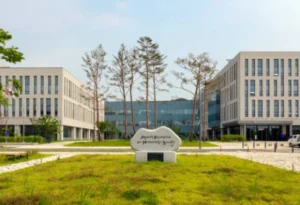
Beyond GKS, KAIST (Korea Advanced Institute of Science and Technology) offers its own institutional scholarships for outstanding international graduate students.
KAIST International Student Scholarship:
- Full tuition waiver
- Monthly stipend KRW 300,000–500,000 (~$230–$380 USD)
- Research Assistantship stipend KRW 500,000–1,000,000 (~$380–$750 USD) additional
Eligibility:
- Outstanding academic record in engineering or sciences
- English proficiency — IELTS 6.5 / TOEFL 90 or KAIST English test
- Strong research background
Top KAIST Programs: Computer science, electrical engineering, mechanical engineering, aerospace engineering, chemical engineering, biomedical engineering, industrial and systems engineering.
Deadline: September–October 2026 for Spring 2027 intake
Engineering-Specific Application Tips
Write a Real-World Problem Statement
The most effective engineering scholarship personal statements start with a specific real-world problem — not a general interest in the field.
“My city of Faisalabad discharges 40% of its industrial wastewater untreated into the Chenab river — affecting 2 million downstream users. My proposed research on electrochemical treatment of textile dye wastewater is specifically designed to produce a low-cost solution for Pakistan’s textile industry” is a problem statement.
“I am interested in environmental engineering and have always wanted to improve water quality” is not.
Name Your Technical Approach
Engineering scholarship committees — particularly for DAAD and Erasmus — often include technical reviewers. Your research proposal or SOP should include your specific technical approach: which method, which material, which algorithm, which standard.
This is not about showing off jargon — it is about demonstrating that your research proposal is grounded in real technical knowledge.
Connect to Industry Impact
Engineering research has direct industrial application — and scholarship committees know it. Connect your proposed research to a specific industry, a specific company (if applicable), or a specific national infrastructure project. Germany’s DAAD, Korea’s GKS, and Japan’s MEXT all prioritize research with clear applied value.
Quick Comparison — Engineering Scholarships 2026
| Scholarship | Country | GRE? | IELTS? | Min GPA | Deadline |
|---|---|---|---|---|---|
| DAAD | Germany | ❌ | 6.0/MOI ✅ | ~3.0 | Nov 15, 2026 |
| Erasmus Engineering | EU | ❌ | 6.5 | ~3.0 | Jan–Mar 2026 |
| GKS Korea | South Korea | ❌ | No/MOI ✅ | 2.64 | Feb–Mar 2027 |
| MEXT Japan | Japan | ❌ | No ✅ | ~2.8 | Apr–May 2026 |
| CSC China | China | ❌ | No/MOI ✅ | None | Feb–May 2027 |
| TU Delft | Netherlands | ❌ | 6.5 | Top 5% | Jan–Feb 2027 |
| Commonwealth | UK | ❌ | 6.5 | ~3.0 | Oct–Nov 2026 |
| KAIST | Korea | ❌ | 6.5 | Top applicants | Sep–Oct 2026 |
Free Tools for Your Engineering Scholarship Application
- 🔬 Free Research Proposal Generator — For PhD and research scholarship proposals
- 📄 Free SOP Generator — Statement of Purpose
- 💌 Free Motivation Letter Generator — For DAAD and Erasmus
- 📑 Free CV Builder — Academic CV with projects and publications
- 📋 Free MOI Certificate Generator — Skip IELTS for DAAD, GKS, MEXT, CSC
- 📜 Free Reference Letter Generator — For supervisors and professors
- 📖 Free IELTS & TOEFL Practice — For programs requiring English tests
FAQ — Engineering Scholarships 2026
Q: Which is the best scholarship for engineering students?
Research-focused students: DAAD (Germany) for quality + zero tuition. For accessibility: GKS Korea (2.64 GPA, no IELTS), for stipend: MEXT Japan (~$950/month), and for multi-country exposure: Erasmus Mundus engineering programs.
Q: Can I get an engineering scholarship without IELTS?
Yes — GKS Korea, MEXT Japan, and CSC China all accept engineering students without IELTS. MOI Certificate is accepted for DAAD. Read our Scholarships Without IELTS Guide.
Q: What GPA do I need for engineering scholarships?
GKS Korea: 2.64/4.0 (lowest). DAAD: ~3.0/4.0. MEXT: ~2.8/4.0. Erasmus: ~3.0/4.0. TU Delft: top 5–10%. Most engineering scholarships are more accessible than academic programs because practical skills and research experience also matter.
Q: Which country is best for engineering scholarships?
Germany (DAAD + tuition-free universities) for research quality. South Korea (GKS + KAIST) for technology industry access. Japan (MEXT) for robotics and precision engineering. The Netherlands (TU Delft) for civil and water engineering.
Q: Do engineering scholarships require GRE?
No — none of the scholarships on this list require GRE. Read our Scholarships Without GRE Guide.
Q: Is engineering research proposal different from other fields?
Yes — engineering proposals must include specific technical approaches (methods, materials, standards, tools). Committees include technical reviewers who evaluate whether your proposed methodology is credible. “I will use appropriate methods” does not work in an engineering proposal.