


Arts and humanities students are often told that scholarships are for STEM fields — that funding for literature, history, philosophy, political science, languages, law, and social sciences is scarce.
This is wrong.
Several of the world’s most competitive and prestigious scholarship programs — Chevening, Rhodes, Gates Cambridge, Fulbright, DAAD, and Erasmus Mundus — fund arts and humanities students as actively as they fund engineers and scientists. In many cases, humanities applicants face significantly less competition than STEM applicants, because fewer students apply in these fields.
This guide covers the best fully funded scholarships for arts and humanities students in 2026 — with exact eligibility, deadlines, and field-specific application tips.
Why Arts and Humanities Students Are Competitive for Scholarships
Scholarship committees selecting for leadership, critical thinking, writing ability, and social impact often find humanities applicants more compelling than technical ones — for three reasons:
Writing is evaluated directly. Scholarship committees read essays and personal statements. A literature or political science graduate who writes with precision and clarity stands out immediately against technical applicants who write poorly.
Social impact is central. Most major scholarships — Chevening, Rhodes, Gates Cambridge, Commonwealth — evaluate commitment to improving society. Humanities students who have worked in policy, law, education, journalism, or community development often have the most relevant experience for these criteria.
Competition is lower. Most students in developing countries study STEM — meaning scholarship pools for humanities fields contain fewer applicants. A strong humanities application at Chevening competes against fewer candidates than a strong engineering application.
Top Scholarships for Arts and Humanities Students 2026
1. Chevening Scholarship — UK 🇬🇧
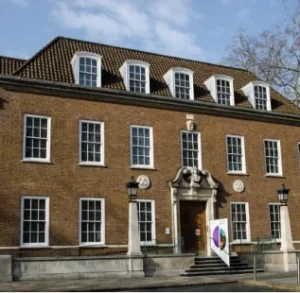
The Chevening Scholarship was designed with humanities and social sciences students in mind. Its four evaluation criteria — leadership, networking, studying in the UK, and career plan — are tailor-made for students in law, political science, international relations, economics, journalism, development studies, and public policy.
What’s Covered:
- Full tuition at any UK university
- Monthly living stipend £1,236 (London) / £1,084 (elsewhere)
- Return economy airfare
- Visa fee reimbursement
Eligibility:
- Eligible country citizen
- Bachelor’s degree equivalent to UK 2:1
- Minimum 2 years full-time work experience — mandatory
- IELTS 6.5 minimum
- Must return home for 2 years after scholarship
Strong Humanities Programs at UK Universities for Chevening:
- LSE — economics, social policy, international relations, law
- Oxford — PPE, law, history, international relations
- Cambridge — history, philosophy, law, politics
- UCL — area studies, social sciences, development studies
- King’s College London — war studies, law, international relations
- SOAS — development studies, area studies, languages
Chevening and Humanities — What Works: The leadership essay is where humanities students often shine. Policy reform, community organizing, legal aid, journalism, education reform, NGO leadership — these professional backgrounds speak directly to Chevening’s selection criteria.
Deadline: November 5, 2026
👉 Free SOP Generator — For Chevening essays 👉 Read our Chevening Scholarship 2026 Guide
2. DAAD Scholarship — Germany (Humanities) 🇩🇪
The DAAD Scholarship has a strong humanities tradition — Germany is one of the world’s leading destinations for philosophy, history, linguistics, German studies, European studies, and cultural studies.
What’s Covered:
- Full tuition (German public universities are tuition-free)
- Monthly stipend €850 (Master’s) / €1,200 (PhD)
- Health insurance
- Travel allowance
Strong Humanities Programs at German Universities:
- Heidelberg University — philosophy, history, South Asian studies
- Humboldt University Berlin — philosophy, social sciences, cultural studies
- Freie Universität Berlin — area studies, political science, law
- Ludwig Maximilian University Munich — history, philosophy, social sciences
- University of Göttingen — history, law, social sciences
- University of Cologne — media studies, communication, social sciences
Eligibility:
- Bachelor’s in humanities, social sciences, law, or related field
- Minimum GPA ~3.0/4.0
- IELTS 6.0 or MOI Certificate ✅ (for English-medium programs)
- German language B2 for German-medium programs
- Motivation letter naming a specific German professor
Humanities-Specific DAAD Tips: German humanities departments have specific theoretical traditions — philosophy, sociology, and political theory in particular. Your motivation letter should engage with the theoretical framework of your target professor’s work — not just their research topic. Demonstrating familiarity with German intellectual traditions significantly strengthens humanities DAAD applications.
Deadline: November 15, 2026
👉 Free Motivation Letter Generator — DAAD motivation letter 👉 Free MOI Certificate Generator — Replace IELTS
3. Gates Cambridge Scholarship — Humanities and Social Sciences 🇬🇧
The Gates Cambridge Scholarship funds PhD and MPhil research at Cambridge — and humanities and social sciences students are as competitive as STEM applicants when they demonstrate genuine commitment to improving human welfare.
Strong Humanities Research at Cambridge:
- Faculty of History — one of the world’s strongest history departments
- Faculty of Law — Cambridge Law is globally ranked
- Faculty of Philosophy — analytic philosophy tradition
- Faculty of English — world-leading literary scholarship
- Department of Politics and International Studies (POLIS)
- Centre of Development Studies
What’s Covered:
- Full Cambridge tuition
- Living allowance £21,756 per year
- Return airfare
- Academic development funding
Eligibility:
- Non-UK citizens applying for Cambridge PhD, MPhil, or one-year postgraduate
- Outstanding academic record — top 5–10% of graduating class
- IELTS 7.5 minimum
- Demonstrated social commitment and leadership
Humanities Gates Cambridge Strategy: The social commitment criterion (Criterion 3) is where humanities applicants typically outperform STEM applicants — because humanities research is often inherently connected to social questions. A political science researcher studying electoral fraud in fragile democracies, a historian documenting partition violence and its legacy, a legal scholar researching access to justice — these applications speak directly to Gates Cambridge’s social mission in ways that an AI paper may not.
Deadline: December 4, 2026 (Round 2)
👉 Read our Gates Cambridge Scholarship 2026 Guide
4. Rhodes Scholarship 🌍
The Rhodes Scholarship is one of the world’s most prestigious — funding postgraduate study at the University of Oxford, and historically strongest in law, philosophy, politics, economics, and international relations.
What’s Covered:
- Full Oxford tuition
- Monthly stipend covering living expenses
- Return airfare
- Health insurance
- Access to the Rhodes Trust global alumni network
Eligibility:
- Citizens of eligible countries (check rhodeshouse.ox.ac.uk)
- Under 24 years old for most programs
- Exceptional academic record — typically first class degree or equivalent
- Demonstrated leadership, commitment to public service, and physical vigor
Humanities Strong Point: Rhodes Scholarship selection panels consistently favor applicants in law, philosophy, politics, economics, history, and development studies — fields where Oxford’s academic strength aligns directly with the scholarship’s public service mission.
Deadline: Varies by country — typically July–October 2026
5. Fulbright Scholarship — Social Sciences and Humanities 🇺🇸
The Fulbright Foreign Student Program funds Master’s and PhD programs at US universities — and humanities and social sciences are among the most heavily funded fields across most countries’ Fulbright allocations.
Strong Fields for Fulbright Humanities Applicants: Political science, international relations, law, history, sociology, cultural studies, development studies, journalism, education, and public administration.
What’s Covered:
- Full tuition at the placed US university
- Monthly living stipend
- Round-trip airfare
- Health insurance
Eligibility:
- Bachelor’s degree with strong academic record (3.5/4.0 typically)
- TOEFL iBT 79+ (TOEFL preferred over IELTS)
- Strong leadership and community service record
- Apply through your country’s Fulbright Commission
Humanities Fulbright Strategy: The study objective essay must connect your proposed academic study to a specific social impact in your home country. For humanities applicants — “I will study political science to return and build civic education programs in Pakistan’s public schools” is stronger than “I want to learn about political theory.”
Deadline: Varies by country — typically May–September 2026
👉 Free SOP Generator — Fulbright personal statement
6. Erasmus Mundus — Humanities Programs 🇪🇺
Several Erasmus Mundus Joint Master’s programs are specifically designed for humanities and social sciences students.
Top Erasmus Humanities Programs:
- EUROCULTURE — Society, Politics and Culture in a Global Context (multiple European partners)
- GEMMA — Women’s and Gender Studies (European universities)
- GLORE — Global Studies — A European Perspective
- IMACS — Advanced Communication Systems
- Journalism, Media and Globalisation — multiple partners including Sciences Po Paris
- Human Rights Practice — University of Gothenburg and others
- International Development Studies (IDS) — multiple European partners
- Migration Studies (MERIT) — multiple European partners
What’s Covered:
- Full tuition at 2–3 European universities
- Monthly living allowance €1,400
- Travel and installation allowance €1,000
- Health insurance and visa costs
Deadline: January–March 2026 (varies by consortium)
👉 Read our Erasmus Mundus Scholarships 2026 Guide
7. Commonwealth Scholarship — Humanities 🇬🇧
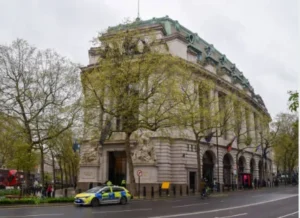
The Commonwealth Scholarship explicitly targets students whose proposed study connects to development challenges — making it ideal for humanities students in law, governance, education, social policy, and development studies.
What’s Covered:
- Full UK tuition
- Monthly living allowance ~£1,347
- Return airfare
- Study travel grant
Strong Humanities Fields for Commonwealth: Development studies, law, public policy, education, gender studies, human rights, international relations, social policy, governance, and journalism.
The Development Impact Statement: This is where humanities applicants for Commonwealth typically outperform STEM applicants. A lawyer who will use UK LLM training to reform constitutional law in their country, a journalist who will use a media studies Master’s to build press freedom capacity, an education specialist who will reform curriculum development — these are exactly the development stories Commonwealth committees want to read.
Deadline: October–November 2026
👉 Read our Commonwealth Scholarship 2026 Guide
8. Swedish Institute Scholarship — Humanities and Social Sciences 🇸🇪
The Swedish Institute Scholarship for Global Professionals (SISGP) specifically prioritizes applicants working in sustainability, democracy, human rights, and development — fields closely aligned with humanities and social sciences.
Strong Humanities Programs in Sweden:
- Uppsala University — history, theology, social sciences, law
- Stockholm University — political science, economics, social work
- Lund University — European studies, social sciences, law
- Södertörn University — Baltic and East European studies
What’s Covered:
- Monthly living grant SEK 11,000 (~$1,050 USD)
- Travel grant and health insurance
Deadline: February 2027
Humanities-Specific Application Tips
Your Writing IS Your Application
Scholarship committees evaluate humanities applicants differently from STEM applicants — because the quality of your written documents is itself evidence of your academic ability. A mediocre engineer can sometimes win a scholarship on grades and research experience. A mediocre writer applying for a humanities scholarship signals immediately that they are not yet ready for graduate-level work in their field.
Write your essays, personal statements, and motivation letters with the care you would give a university submission. Revise them 8–12 times. Have a professor read them. Your writing quality is not peripheral to your application — it is the application.
Name Theoretical Frameworks, Not Just Topics
Humanities PhD and research proposals are evaluated on theoretical sophistication — not just topic relevance. “I want to research Pakistani politics” is a topic. “I propose a Foucauldian discourse analysis of legitimation strategies in PTI’s 2014–2022 political communications, examining how anti-corruption rhetoric constructed a populist political subject in post-colonial Pakistan” is a research question with a theoretical framework.
Even if the committee member does not know Foucault, the specificity of a theoretically grounded research question signals graduate-level readiness.
Connect Your Research to Living People
The best humanities scholarship applications connect abstract research questions to real human stakes. Historical research on partition has implications for contemporary community trauma. Linguistic research on endangered languages connects to cultural preservation. Political science research on electoral systems connects to governance and democracy.
Show the committee why your humanities research matters — not just academically but for people’s lives.
Quick Comparison — Arts and Humanities Scholarships 2026
| Scholarship | Country | Work Exp? | IELTS? | Humanities Focus |
|---|---|---|---|---|
| Chevening | UK | 2 years ✅ | 6.5 | Leadership + policy |
| DAAD | Germany | No | 6.0/MOI | Research + theory |
| Gates Cambridge | UK | No | 7.5 | Social impact research |
| Rhodes | UK | No | — | Law, PPE, development |
| Fulbright | USA | No | TOEFL 79 | All humanities |
| Erasmus Mundus | EU | No | 6.5 | Specific programs |
| Commonwealth | UK | No | 6.5 | Development focused |
| Swedish Institute | Sweden | 3 years | 6.5 | Democracy, rights |
Free Tools for Your Humanities Scholarship Application
- 📄 Free SOP Generator — Statement of Purpose for humanities scholarships
- ✍️ Free Personal Statement Generator — For Chevening and Fulbright essays
- 💌 Free Motivation Letter Generator — For DAAD and European programs
- 🔬 Free Research Proposal Generator — For PhD research proposals
- 📑 Free CV Builder — Academic CV with publications and conferences
- 📜 Free Reference Letter Generator — Academic references
- 📖 Free IELTS & TOEFL Practice — English test preparation
FAQ — Arts and Humanities Scholarships 2026
Q: Do arts and humanities students get scholarships?
Yes — Chevening, Rhodes, Gates Cambridge, Fulbright, DAAD, Erasmus Mundus, and Commonwealth all actively fund humanities and social sciences students. Competition in these fields is often lower than in STEM.
Q: Which scholarship is best for political science students?
Chevening (UK) for policy-focused students with work experience. Fulbright (USA) for research-focused political science. Rhodes (Oxford) for exceptional undergraduates. DAAD for political theory and area studies research.
Q: Which scholarship is best for law students?
Chevening funds LLM programs at UK law schools including Oxford, Cambridge, LSE, and King’s. Commonwealth funds UK law programs with development focus. Rhodes funds Oxford law. Gates Cambridge funds Cambridge LLM and PhD law programs.
Q: Can journalism students get fully funded scholarships?
Yes — Erasmus Mundus has a specific Journalism and Media program. Fulbright funds media and communications. Chevening funds journalism programs at UK universities. Several universities in Sweden and the Netherlands also offer journalism Master’s with scholarships.
Q: Do I need work experience for humanities scholarships?
Chevening requires minimum 2 years. Swedish Institute requires 3 years. DAAD, Erasmus Mundus, Gates Cambridge, and Fulbright do not require work experience. Commonwealth does not require it for Master’s.
Q: Is German language required for DAAD humanities scholarships?
For English-medium programs at German universities — no. For German-medium programs — typically B2 level German. Many German humanities departments offer English-medium Master’s programs specifically for international students.