
Here’s something most applicants find out too late:
You can have a perfect SOP, strong grades, and solid recommendation letters — and still get rejected. Not because you weren’t good enough, but because one document was missing, expired, or in the wrong format.
Scholarship committees don’t chase you for missing paperwork. They move on to the next applicant.
This guide gives you the exact document checklist for the world’s top scholarships — country by country, program by program. Go through it before you submit anything.
Why Documents Matter More Than You Think
Every scholarship has a checklist. Most students skim it once, assume they have everything, and submit.
That’s a mistake.
The reality is that document requirements are highly specific. Some scholarships want transcripts in a particular format, some need your degree certificate attested by a government authority, and some ask for a medical certificate issued within the last 30 days.
Miss one of these details and your application gets rejected — not reviewed, not deferred. Rejected.
The good news: this is 100% preventable. You just need to know what’s required before you start gathering documents — not the night before the deadline.
Documents Every Scholarship Requires:
Before getting into country-specific lists, here are the documents almost every scholarship asks for. Start collecting these first.
| Document | What It Is | Important Notes |
|---|---|---|
| Valid Passport | Minimum 6 months validity beyond program start | Renew early — passport offices can take 4–8 weeks |
| Academic Transcripts | Official records from all universities attended | Must be official, stamped, and often notarized |
| Degree Certificates | Your Bachelor’s or Master’s degree certificate | Some scholarships need attested copies |
| SOP / Motivation Letter | Your personal statement | Scholarship-specific — never reuse without editing |
| Recommendation Letters | Usually 2–3 letters from professors or employers | Check if online submission or sealed envelope required |
| CV / Resume | Academic and professional history | Use Europass format for European scholarships |
| Passport-size Photos | Recent photographs | Check exact size requirements — they vary |
| Language Certificate | IELTS, TOEFL, MOI Certificate, or equivalent | Check which one each scholarship accepts |
| Research Proposal | Required for PhD and research programs | Usually 1,000–2,000 words |
Get these ready first. Then add the scholarship-specific documents below.
DAAD Scholarship — Germany 🇩🇪:

The DAAD (Deutscher Akademischer Austauschdienst) has one of the more detailed document requirements. Everything must be organized and submitted through the DAAD portal.
Complete DAAD Document Checklist:
- ✅ Completed DAAD online application form
- ✅ Curriculum Vitae (CV) — maximum 3 pages, Europass format preferred
- ✅ Motivation Letter / SOP — 600–800 words
- ✅ Two academic recommendation letters (on official letterhead, signed and stamped)
- ✅ Official university transcripts (all years, certified copies)
- ✅ Bachelor’s degree certificate (certified copy)
- ✅ Language certificate:
- For English programs: IELTS / TOEFL OR MOI Certificate
- For German programs: TestDaF or DSH certificate
- ✅ Research proposal (for research scholarships) — 1,000–1,500 words
- ✅ Passport copy (valid for at least 12 months beyond program start)
- ✅ Portfolio (for architecture, art, or design programs only)
📑 Need a scholarship CV? Build one free with our CV Builder — 3 templates, PDF & Word download.
DAAD-Specific Notes:
- All documents in English or German only — no exceptions
- Certified copies mean stamped by your university registrar, not a photocopy
- Recommendation letters must come directly from the recommender — not handed to you
- DAAD does not accept late submissions under any circumstances
👉 Read our full DAAD Scholarship 2026 Guide for application strategy and tips.
Chevening Scholarship — United Kingdom 🇬🇧:

Chevening has a two-stage process. Documents are submitted online through the Chevening portal, and the reference letters are collected separately.
Complete Chevening Document Checklist:
Stage 1 — Initial Application:
- ✅ Chevening online application form (4 essays of 500 words each)
- ✅ Passport copy
- ✅ Undergraduate degree certificate
- ✅ Official academic transcripts
- ✅ CV (maximum 2 pages)
- ✅ Three university choices (must select before submitting)
Stage 2 — If Shortlisted:
- ✅ Two reference letters (submitted directly by referees online)
- ✅ English language certificate — IELTS 6.5+ or equivalent (TOEFL, PTE, Cambridge)
- ✅ Unconditional offer letter from a UK university
- ✅ Proof of work experience (minimum 2 years — payslips, employment contract, or employer letter)
📖 Preparing for IELTS or TOEFL? Try our Free Practice Tests — Reading, Writing, Vocabulary, Grammar and Speaking.
Chevening-Specific Notes:
- References must be submitted by your referees directly — you cannot upload them yourself
- You need an unconditional offer from a UK university before the final award is confirmed
- Work experience proof must cover the full 2-year requirement — gaps need explanation
- Chevening checks your LinkedIn profile — keep it updated and professional
👉 See our Chevening Scholarship 2026 Complete Guide for essay tips.
Fulbright Scholarship — United States 🇺🇸:

Fulbright applications go through your home country’s Fulbright Commission or U.S. Embassy. Requirements vary slightly by country — but the core list is consistent.
Complete Fulbright Document Checklist:
- ✅ Fulbright online application form (via Embark platform)
- ✅ SOP / Personal Statement — 500–700 words
- ✅ Study/Research Objective Statement — 500–700 words (separate from personal statement)
- ✅ CV / Resume — maximum 2 pages
- ✅ Three recommendation letters (submitted online by recommenders)
- ✅ Official transcripts from all universities attended
- ✅ Bachelor’s degree certificate
- ✅ TOEFL score (minimum varies — check your country’s Fulbright page)
- ✅ Passport copy
- ✅ Research proposal (for research applicants) — 500–750 words
- ✅ Writing sample (for some disciplines — check program requirements)
📄 Struggling with your SOP? Use our Free SOP Generator — ready in 2 minutes.
Fulbright-Specific Notes:
- Fulbright uses TOEFL — not IELTS — as its primary English test
- Some countries also require a local language test or interview
- The personal statement and study objective are two separate documents — don’t combine them
- Recommenders receive an automated email — follow up with them personally to ensure they submit
👉 Read our Fulbright Scholarship 2026 Complete Guide for U.S. university selection tips.
MEXT Scholarship — Japan 🇯🇵:

MEXT applications go through the Japanese Embassy in your home country. The document checklist is strict and highly specific — formatting matters.
Complete MEXT Document Checklist:
- ✅ MEXT application form (downloaded from Japanese Embassy website — handwritten or typed)
- ✅ Field of Study and Study Program (research plan) — 2 pages maximum
- ✅ Official academic transcripts — all years, certified
- ✅ Bachelor’s degree certificate — certified copy
- ✅ Two recommendation letters (from professors, on official letterhead)
- ✅ Medical certificate (issued within 3 months of application — specific MEXT format required)
- ✅ Passport copy
- ✅ Passport-size photos (specific size: 3cm × 4cm, recent, white background)
- ✅ Abstract of graduation thesis (for research students)
- ✅ Certificate of enrollment (if currently enrolled in a degree program)
📋 No IELTS? Generate your Free MOI Certificate — accepted by DAAD, GKS, MEXT and 20+ scholarships.
MEXT-Specific Notes:
- MEXT has its own medical certificate form — download it from the Embassy website, don’t use a general health certificate
- Photos must be 3cm × 4cm exactly — standard passport size is often rejected
- Application forms must be free of corrections or white-out — redo the page if you make an error
- No IELTS or TOEFL required at application stage — language assessment happens at the Embassy interview
👉 See our MEXT Japan Scholarship 2026 Guide for Embassy interview preparation.
GKS Scholarship — South Korea 🇰🇷:

The Global Korea Scholarship (GKS) has two tracks — Embassy Track and University Track. Document requirements are similar but check your specific university’s list as well.
Complete GKS Document Checklist:
- ✅ GKS application form (downloaded from NIIED website)
- ✅ Personal statement — 1,000–1,500 words
- ✅ Study plan — 1,000–1,500 words (separate from personal statement)
- ✅ Official academic transcripts — certified copies
- ✅ Bachelor’s degree certificate — certified copy
- ✅ Two recommendation letters (from professors or employers, on official letterhead)
- ✅ Medical certificate (NIIED-specific form — must be signed by a licensed physician)
- ✅ Passport copy (valid for at least 18 months)
- ✅ Passport-size photos (3cm × 4cm, white background)
- ✅ TOPIK certificate (if available) — not mandatory but strengthens application
- ✅ Proof of any awards or achievements (optional but recommended)
- ✅ Certificate of citizenship or family relation document (varies by country)
GKS-Specific Notes:
- Personal statement and study plan are two separate documents — both required
- Medical certificate must use the NIIED official form — not a general health check
- Embassy Track and University Track have slightly different requirements — confirm with your local Korean Embassy
- GPA must be 2.64/4.0 or above (80% equivalent) — include a grading scale explanation if your system is different
👉 Read our full GKS Korean Government Scholarship Guide for Embassy vs University track comparison.
Erasmus Mundus — Europe 🇪🇺:

Erasmus Mundus requirements vary by consortium — each program has its own portal and checklist. However, the core documents are consistent across most programs.
Complete Erasmus Mundus Document Checklist:
- ✅ Online application form (consortium-specific portal)
- ✅ Motivation letter — 500–800 words (program-specific)
- ✅ CV — Europass format strongly recommended
- ✅ Official academic transcripts — all degrees
- ✅ Bachelor’s degree certificate
- ✅ Two recommendation letters
- ✅ English language certificate:
- IELTS / TOEFL / Duolingo / MOI Certificate (check program requirements)
- ✅ Passport copy
- ✅ Research proposal (for research-track programs)
- ✅ Portfolio (for creative or design programs)
Erasmus-Specific Notes:
- Each Erasmus Mundus consortium has its own deadline and portal — apply to multiple programs to increase your chances
- Europass CV format is standard across all European scholarships — use it
- Some consortiums interview shortlisted candidates via video call
- Language requirements vary — some programs accept Duolingo English Test scores
Turkiye Burslari — Turkey 🇹🇷:
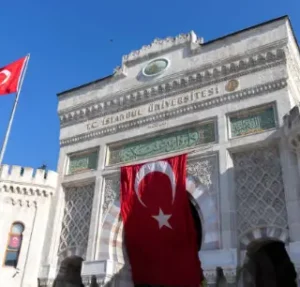
Turkiye Burslari applications are submitted through the official scholarships.gov.tr portal. The process is fully online.
Complete Turkiye Burslari Document Checklist:
- ✅ Online application form (scholarships.gov.tr)
- ✅ Academic transcripts — all years
- ✅ High school diploma / Bachelor’s degree certificate
- ✅ National ID or Passport copy
- ✅ Passport-size photo (uploaded online — recent, clear background)
- ✅ Language certificate (if available — not mandatory):
- Turkish: TÖMER or equivalent
- English: IELTS / TOEFL / MOI Certificate
- ✅ Proof of any awards, publications, or achievements (optional)
- ✅ Letter of intent (some programs require it — check your chosen university)
Turkiye Burslari-Specific Notes:
- No IELTS required — language proficiency is assessed during the interview
- Turkish language course is provided for one full year after arrival — no prior Turkish needed
- Application is 100% online — no physical documents at the initial stage
- Shortlisted candidates are called for an in-person or online interview
Quick Document Comparison — All Scholarships:
| Document | DAAD | Chevening | Fulbright | MEXT | GKS | Erasmus | Turkiye |
|---|---|---|---|---|---|---|---|
| SOP / Motivation Letter | ✅ | ✅ (4 essays) | ✅ | ✅ | ✅ | ✅ | Sometimes |
| CV / Resume | ✅ | ✅ | ✅ | ❌ | ❌ | ✅ | ❌ |
| Transcripts | ✅ | ✅ | ✅ | ✅ | ✅ | ✅ | ✅ |
| Degree Certificate | ✅ | ✅ | ✅ | ✅ | ✅ | ✅ | ✅ |
| Recommendation Letters | ✅ 2 | ✅ 2 | ✅ 3 | ✅ 2 | ✅ 2 | ✅ 2 | ❌ |
| Research Proposal | Sometimes | ❌ | Sometimes | ✅ | ✅ (Study Plan) | Sometimes | ❌ |
| Medical Certificate | ❌ | ❌ | ❌ | ✅ | ✅ | ❌ | ❌ |
| IELTS / Language Test | MOI OK | IELTS/TOEFL | TOEFL | ❌ | MOI OK | Varies | ❌ |
| Work Experience Proof | ❌ | ✅ (2 years) | Sometimes | ❌ | ❌ | ❌ | ❌ |
How to Organise Your Documents — Step by Step
Collecting documents is one thing. Organising them so you don’t miss anything is another.
Here’s the system that works:
Step 1 — Create a folder on your computer One main folder called “Scholarship Applications 2026.” Inside it, one subfolder for each scholarship you’re applying to.
Step 2 — Download the official checklist Go to the official scholarship website and download their document list. Don’t rely on a third-party website — requirements change every year.
Step 3 — Make a tracking spreadsheet List every required document. Add three columns: Collected, Certified/Attested, and Submitted. Update it as you go.
Step 4 — Start with the slow ones first Some documents take weeks to get. Start with:
- Passport renewal (4–8 weeks)
- Attested transcripts (1–3 weeks)
- Recommendation letters (2–4 weeks — your professors are busy)
- Medical certificates (1–2 weeks for MEXT/GKS-specific formats)
Step 5 — Prepare digital and physical copies Scan everything at 300 DPI minimum. Save as PDF. Most online portals accept PDF only — check file size limits before uploading.
Common Document Mistakes That Cause Rejection
Expired passport — Check your passport validity today. If it expires within 18 months of the program start date, renew it before applying.
Unofficial transcripts — A transcript you printed from your student portal is not an official transcript. It needs to come from your university’s registrar, in a sealed envelope or with an official stamp.
Wrong photo size — MEXT and GKS require 3cm × 4cm photos. Standard passport photos are 3.5cm × 4.5cm. These are different. Check before printing.
Recommendation letters handed to you — Most scholarships ask referees to submit letters directly, either by email or through an online portal. If you submit the letter yourself, it will be rejected.
Missing grading scale — If your university uses a percentage system or a non-standard GPA scale, include a grading scale explanation alongside your transcripts. Without it, the committee can’t evaluate your grades accurately.
Wrong language certificate — Fulbright wants TOEFL. DAAD accepts MOI. MEXT doesn’t ask for one at all. Don’t submit an IELTS certificate to a program that doesn’t accept it.
FAQ — Scholarship Documents
Q: Do I need to get my documents attested or notarized?
It depends on the scholarship. DAAD asks for certified copies (stamped by your university). Some government scholarships require notarization from a government authority. Always check the specific requirement — certified and notarized are different things.
Q: Can I submit photocopies instead of originals?
Most online applications accept scanned PDFs. For in-person submissions or Embassy applications, originals or certified copies are usually required. Check the application guidelines.
Q: What if my university doesn’t issue official transcripts in English?
Get a certified translation done by an official translator. Attach both the original and the translation. Do not translate it yourself.
Q: How early should I start collecting documents?
At least 6–8 weeks before the deadline. Some documents — like passport renewal, attested transcripts, or recommendation letters — take much longer than you expect.
Q: My degree certificate is damaged or lost — what do I do?
Contact your university’s registrar immediately and request a replacement or a certified duplicate. This can take several weeks, so don’t wait.
Q: Can I use the same recommendation letters for multiple scholarships?
In most cases, yes — as long as the letter is submitted fresh each time. Some scholarships (like Chevening) require referees to submit directly through their portal, so the referee needs to submit a separate entry for each scholarship.
Ready to Apply?
Now that you know exactly what documents each scholarship needs, the next step is to start collecting them — starting with the ones that take the longest.
While you’re gathering your paperwork, use our Eligibility Checker to confirm which scholarships you qualify for, and check the Deadlines Calendar to plan your timeline.
👉 Browse All Scholarships 👉 Check Your Eligibility 👉 View All Deadlines 👉 How to Write a Winning SOP