
Most scholarship applicants treat IELTS or TOEFL as a formality — something to check off the list.
That is a mistake.
A low English test score can disqualify an otherwise strong application before anyone reads your SOP. Chevening requires IELTS 6.5. Australia Awards requires 6.5. Gates Cambridge requires 7.5. Miss the cutoff by even half a band and you are out — regardless of your GPA, your research, or your motivation.
The good news is that IELTS and TOEFL are learnable tests. Unlike academic exams that test years of knowledge, these tests have predictable formats, consistent question types, and strategies that genuinely work — if you apply them consistently.
This guide gives you a realistic preparation strategy, the best free and paid resources, section-by-section tips, and a 30-day study plan.
IELTS vs TOEFL — Which One Should You Take?
Before you start preparing, make sure you are preparing for the right test.
| Feature | IELTS Academic | TOEFL iBT |
|---|---|---|
| Format | Paper or computer-based | Computer-based only |
| Scoring | Band 0–9 (in 0.5 increments) | 0–120 points |
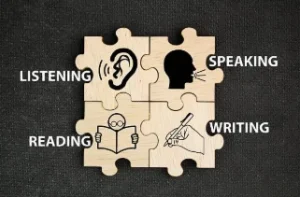
| Sections | Listening, Reading, Writing, Speaking | Reading, Listening, Speaking, Writing |
| Speaking test | Face-to-face with an examiner | Recorded responses (no examiner) |
| Duration | 2 hours 45 minutes | About 3 hours |
| Result time | 3–5 days (computer); 13 days (paper) | 4–8 days |
| Accepted by | UK, Australia, Canada, Europe, most scholarships | USA-focused; accepted globally |
| Cost | Approximately $200–$250 USD | Approximately $220–$260 USD |
Which to take:
- Applying to UK scholarships (Chevening, Gates Cambridge)? Take IELTS.
- Applying to Fulbright or US universities? Take TOEFL.
- Applying to DAAD, Erasmus, Australia Awards? Either is accepted — check the specific program.
- Applying to GKS, MEXT, Turkiye Burslari? Neither is required — MOI Certificate accepted.
If you are applying to multiple scholarships across different countries, IELTS Academic is the more universally accepted option.
📖 Preparing for IELTS or TOEFL? Try our Free Practice Tests — Reading, Writing, Vocabulary, Grammar and Speaking.
Minimum Score Requirements by Scholarship
| Scholarship | IELTS Minimum | TOEFL Minimum | Notes |
|---|---|---|---|
| Chevening | 6.5 overall | 79 iBT | No band below 6.5 |
| Gates Cambridge | 7.5 overall | 110 iBT | High bar — aim for 7.5+ |
| Australia Awards | 6.5 overall | 84 iBT | Waiver possible with MOI |
| Fulbright | Varies | 79–100 iBT | Depends on country and university |
| DAAD | Not required | Not required | MOI Certificate accepted |
| GKS | Not required | Not required | MOI Certificate accepted |
| MEXT | Not required | Not required | No language test at application |
| Erasmus Mundus | Varies (5.5–6.5) | Varies | Check individual consortium |
Important: Always aim 0.5–1 band above the minimum. Scholarship pools are competitive and a higher score strengthens your overall application.
Understanding the IELTS Band Scoring System
IELTS scores range from 0 to 9 in 0.5 increments. Your overall band is the average of four section scores: Listening, Reading, Writing, and Speaking.
| Band | Description |
|---|---|
| 9.0 | Expert user |
| 8.0–8.5 | Very good user — minor errors only |
| 7.0–7.5 | Good user — handles complex language well |
| 6.0–6.5 | Competent user — generally effective despite some inaccuracies |
| 5.0–5.5 | Modest user — partial competence |
For most scholarships, your target is 6.5–7.0 overall with no individual band below 6.0.
For Gates Cambridge and highly competitive programs, target 7.5+.
Section-by-Section Strategy
IELTS Listening — Target: Band 7.0+
The Listening test has 40 questions across 4 recordings. You hear each recording once only.
What most students get wrong:
- Reading the questions during the recording instead of before it
- Missing answers because they were still writing the previous one
- Spelling errors (wrong spelling = wrong answer, even if you heard correctly)
What actually works:
Before each section starts: Read all questions for that section during the preview time. Underline keywords. Predict what kind of answer is coming — a number, a name, a date, a place.
During the recording: Follow along with the questions. Write answers as you go — don’t wait until the end.
Spelling: Practice spelling common words under time pressure. Names, addresses, and specific terms are frequently tested.
After the test: You get 10 minutes to transfer answers to the answer sheet. Use this time carefully — check spelling, check that answers are in the right boxes.
Best free resources:
- British Council IELTS practice materials (britishcouncil.org)
- IELTS.org official practice tests
- E2 IELTS on YouTube — free strategy videos
📖 Preparing for IELTS or TOEFL? Try our Free Practice Tests — Reading, Writing, Vocabulary, Grammar and Speaking.
IELTS Reading — Target: Band 7.0+
The Academic Reading test has 3 long passages and 40 questions. You have 60 minutes.
What most students get wrong:
- Reading the passage fully before looking at questions — this wastes time
- Getting stuck on one question and running out of time
- Misreading True/False/Not Given questions (the most commonly failed question type)
What actually works:
Skim first, read strategically: Spend 1–2 minutes skimming each passage for structure and main ideas. Then go to the questions. Find the relevant section of the passage and read carefully only that part.
True / False / Not Given — the most important tip: “Not Given” means the information is simply not in the passage — not that it is false. Students regularly mark “Not Given” answers as “False.” Practice this distinction specifically.
Time management: Spend no more than 20 minutes per passage. If one question is taking too long, mark your best answer and move on. Return if time allows.
Vocabulary: Academic Reading uses formal, academic vocabulary. Reading academic articles and editorials (BBC, The Guardian, The Economist) for 20 minutes daily builds vocabulary faster than any vocabulary list.
Best free resources:
- Cambridge IELTS books (1–18) — best practice materials available
- Road to IELTS (British Council) — free version has sample tests
- IELTS Liz (ieltsliz.com) — free tips and practice
IELTS Writing — Target: Band 6.5+
Writing is where most test-takers lose points — and where consistent practice creates the biggest improvement.
Task 1 (Academic): Describe a graph, chart, table, or diagram in at least 150 words. You have 20 minutes.
Task 2: Write an essay responding to a statement or question in at least 250 words. You have 40 minutes.
Task 2 carries twice the weight of Task 1 — prioritize it accordingly.
What most students get wrong:
- Not answering the actual question asked (biggest single reason for low scores)
- Using informal language and contractions
- Repeating the same vocabulary throughout
- Writing under the word count
What actually works for Task 2:
Use a consistent essay structure every time:
- Introduction — Paraphrase the question + state your position clearly (2–3 sentences)
- Body Paragraph 1 — Main argument + specific example + explanation
- Body Paragraph 2 — Second argument or counterargument + example
- Conclusion — Restate position + summarize key points (2–3 sentences)
Vocabulary tip: Learn synonyms for common essay words. Instead of “important” — use significant, critical, essential, vital. Instead of “many” — use numerous, a substantial number of, a significant proportion of.
What actually works for Task 1:
Always include: overview (what the main trend is), key data points, comparisons between categories, and changes over time. Do not just list numbers — interpret them.
Best free resources:
- IELTS Simon (ielts-simon.com) — best free writing tips online
- Write & Improve by Cambridge (writeandimprove.com) — free AI writing feedback tool
- E2 IELTS Writing on YouTube
📖 Preparing for IELTS or TOEFL? Try our Free Practice Tests — Reading, Writing, Vocabulary, Grammar and Speaking.
IELTS Speaking — Target: Band 6.5+
The Speaking test is a face-to-face conversation with an examiner lasting 11–14 minutes. It has three parts:
- Part 1: Familiar topics — your hometown, family, hobbies, work (4–5 minutes)
- Part 2: Long turn — speak for 1–2 minutes on a topic card (3–4 minutes)
- Part 3: Abstract discussion related to Part 2 topic (4–5 minutes)
What most students get wrong:
- Speaking too quietly or too fast due to nerves
- Giving one-sentence answers instead of developing ideas
- Using memorized phrases that sound rehearsed
- Saying “I don’t know” and stopping — instead of thinking out loud
What actually works:
Develop every answer: When asked “Do you like cooking?” — don’t say “Yes, I do.” Say “Yes, I enjoy cooking — mainly because it gives me a way to switch off after a long day. I find the process of preparing a meal from scratch genuinely relaxing. I mostly cook Pakistani food, but I have been experimenting with Italian dishes recently.”
Fillers that buy time naturally:
- “That’s an interesting question — let me think for a moment…”
- “I hadn’t really considered that before, but I suppose…”
- “From my experience…”
Practice out loud: Reading about speaking techniques does nothing. Record yourself answering practice questions. Listen back. Notice where you hesitate, repeat, or lose fluency.
Best free resources:
- IELTS Speaking Part 2 topic cards — available free at ieltsliz.com
- iTalki — affordable English speaking practice with tutors
- IELTS Advantage (ieltsadvantage.com) — free speaking guides
TOEFL iBT — Key Differences From IELTS

If you are taking TOEFL instead of IELTS, here are the key differences to prepare for:
Reading: Similar to IELTS but with more inference and vocabulary-in-context questions. Academic texts are typically from university-level textbooks.
Listening: Includes academic lectures and campus conversations. Questions test understanding of attitude, purpose, and inference — not just factual recall.
Speaking: You record responses — there is no examiner. This feels unnatural at first. Practice speaking to a microphone specifically. You get 15–30 seconds to prepare and 45–60 seconds to respond.
Writing: Two tasks — Integrated (read a passage + listen to a lecture + write a response) and Independent (write an essay on a given topic). The Integrated task is unique to TOEFL and requires specific practice.
Best free TOEFL resources:
- ETS TOEFL official practice tests (ets.org/toefl)
- Magoosh TOEFL — affordable paid option with free trial
- NoteFull on YouTube — excellent free TOEFL strategy
📖 Preparing for IELTS or TOEFL? Try our Free Practice Tests — Reading, Writing, Vocabulary, Grammar and Speaking.
30-Day Study Plan — IELTS Academic (Band 6.5 Target)
This plan assumes 1.5–2 hours of study per day.
| Week | Focus | Daily Activities |
|---|---|---|
| Week 1 | Diagnosis + Foundation | Take one full practice test. Identify weak sections. Study grammar basics. Build academic vocabulary (10 new words/day). |
| Week 2 | Reading + Listening | 1 full Reading practice test daily. Identify question types you miss most. 2 Listening sections daily with answer review. |
| Week 3 | Writing + Speaking | Write one Task 2 essay daily. Review with Write & Improve. Practice speaking Part 2 topics — record yourself. |
| Week 4 | Full Tests + Review | Take 2 full timed practice tests. Review every wrong answer. Focus final days on your weakest section only. |
Day before the test: Light review only. Sleep 8 hours. Prepare your documents. Do not study intensively — your preparation is already done.
Common Mistakes That Lower Your Score
Practicing without reviewing mistakes Taking practice tests without understanding why you got answers wrong teaches you nothing. Review every incorrect answer in detail.
Ignoring the writing section Writing improves slowly — it needs consistent daily practice over weeks. Students who start writing practice a week before the test almost always score below their potential.
Not practicing under timed conditions The real test has strict time limits. Always practice with a timer. Never give yourself extra time “just this once.”
Relying on translation Students who mentally translate from their native language to English during the test are significantly slower and make more errors. Practice thinking directly in English.
Taking the test before you are ready IELTS and TOEFL cost $200–$260. If your practice test scores are consistently 0.5–1 band below your target, wait and prepare more. Taking the test too early wastes money and may affect your scholarship timeline.
FAQ — IELTS and TOEFL for Scholarships
Q: How long does it take to improve my IELTS score by 1 band?
With consistent daily practice, most students improve by 0.5–1 band within 6–8 weeks. Improving by 1.5–2 bands typically takes 3–6 months of serious preparation.
Q: How long is an IELTS or TOEFL score valid for scholarships?
Both scores are valid for 2 years. Check your test date against scholarship deadlines — an expired score will be rejected.
Q: Is IELTS Academic or IELTS General Training needed for scholarships?
Always IELTS Academic. IELTS General Training is for immigration and work visa purposes — it is not accepted for university admissions or scholarships.
Q: Can I take IELTS or TOEFL multiple times?
Yes — as many times as you want. Most students take it 2–3 times before hitting their target score. Some scholarships may ask about previous test attempts.
Q: Which section is the hardest to improve?
Writing takes the longest to improve because it requires building vocabulary, grammar, and structure simultaneously. Start writing practice earlier than you think you need to.
Q: Are online IELTS preparation courses worth it?
Free resources (Cambridge practice books, IELTS Simon, E2 IELTS on YouTube) are sufficient for most students targeting 6.5–7.0. Paid courses are worth considering if you are targeting 7.5+ or have struggled with specific sections.
📖 Preparing for IELTS or TOEFL? Try our Free Practice Tests — Reading, Writing, Vocabulary, Grammar and Speaking.
Start Preparing Today
Your target score is achievable — but it requires consistent, structured practice over weeks, not cramming in the final days.
Start with a full practice test to find your baseline. Then follow the 30-day plan above, focusing extra time on your weakest section.
Once you have your score, use our Eligibility Checker to confirm which scholarships you now qualify for — and check the Deadlines Calendar to plan your application timeline.
👉 Browse All Scholarships 👉 Scholarships Without IELTS 2026 👉 Check Your Eligibility 👉 View All Deadlines 👉 Document Checklist by Country