
The Fulbright Scholarship has one of the most recognizable names in international education — and for good reason. Since 1946, it has funded over 400,000 scholars from nearly every country in the world to study, research, and teach in the United States.
But here is what most applicants miss: Fulbright is not primarily an academic scholarship. It is a diplomatic program. It selects people who will strengthen the relationship between their home country and the United States — through their research, their professional work, and their personal relationships built during their time in the US.
Understanding that shifts how you write your application. Every element — your personal statement, your study objective, your references — needs to show not just that you are academically strong, but that you will be a genuine ambassador for your country and return home to make a measurable difference.
This guide covers everything: what Fulbright funds, who qualifies, how the two essays work, what the interview looks like, and what actually separates winning applications from the ones that don’t make it through.
What Is the Fulbright Scholarship?
The Fulbright Foreign Student Program was established in 1946 by US Senator J. William Fulbright. It is funded by the US Department of State and administered by the Bureau of Educational and Cultural Affairs (ECA) through Fulbright Commissions and US Embassies in partner countries.
Fulbright alumni include 40 Nobel Prize winners, 60 MacArthur Fellows, and heads of state from multiple countries. More importantly for most applicants — it has produced thousands of researchers, policymakers, educators, and development professionals who returned home and built careers that shaped their fields.
Quick Overview:
| Detail | Information |
|---|---|
| Country | United States 🇺🇸 |
| Degree | Master’s / PhD |
| Funding | Fully Funded |
| Deadline | Varies by country — typically May–October |
| Minimum GPA | ~3.5 / 4.0 (competitive pool) |
| Work Experience | Not required — but strengthens application |
| Age Limit | None |
Types of Fulbright Programs
Fulbright is not a single application — it has several programs depending on your country and field. Choose the one that matches your profile before starting your application.
1. Fulbright Foreign Student Program The main program for international students. Funds Master’s and PhD degrees at US universities across all fields. Open to students from most countries.
2. Fulbright Science and Technology Award Specifically for students in STEM fields — science, technology, engineering, and mathematics. Places scholars at top US research universities with strong lab facilities.
3. Fulbright-HEC Scholarship (Pakistan) Administered jointly by the Fulbright Commission and the Higher Education Commission (HEC) of Pakistan. Pakistani students apply through this specific program — the selection process is managed locally, making it more accessible than the general international pool.
4. Fulbright-Nehru Fellowship (India) Specifically for Indian students and professionals. Covers both research programs and full degree programs. Administered through the United States-India Educational Foundation (USIEF).
5. Fulbright-Clinton Public Policy Fellowship For professionals wanting to work on public policy issues — placed with government ministries or organizations in the US for one year.
If you are from Pakistan or India, apply through your country-specific program — not the general international pool.
What Does Fulbright Cover?

Fulbright is genuinely fully funded. Coverage includes:
| Benefit | Details |
|---|---|
| Tuition fees | Full coverage at the placed US university |
| Monthly living stipend | Varies by university location and cost of living |
| Round-trip airfare | Economy class, home country to USA and back |
| Health insurance | Full coverage for duration of studies |
| Book and equipment allowance | For study materials and research |
| Settling-in allowance | One-time payment on arrival |
| Pre-academic English training | Free, if your English needs strengthening before the program |
Note on university placement: Unlike most scholarships where you choose your university, Fulbright places you at a US university appropriate for your field and study plan. You can express preferences, but the final placement is determined by Fulbright in consultation with US universities. This is actually an advantage — Fulbright’s university relationships are extensive, and placements are generally strong.
Who Can Apply for Fulbright 2026?
Citizenship:
Citizens of Fulbright-eligible countries. Most Asian countries qualify — including Pakistan, India, Bangladesh, Nepal, Sri Lanka, Indonesia, the Philippines, and Vietnam. Check your country’s Fulbright Commission or US Embassy website for current eligibility.
Academic Requirements:
- Bachelor’s degree completed before program start
- Minimum GPA of approximately 3.5/4.0 (or 75–80% equivalent)
- Strong and consistent academic record — not just final year
- Research experience is a significant advantage, especially for PhD applicants
English Language:
- TOEFL iBT: 80+ recommended (some programs require higher)
- IELTS: 6.5+ recommended
- Exact requirements vary by country program — check your country’s Fulbright guidelines
- Note: Fulbright uses TOEFL as its primary English test — not IELTS. Many Pakistani and Indian applicants take IELTS for other scholarships; take TOEFL specifically for Fulbright
📖 Preparing for IELTS or TOEFL? Try our Free Practice Tests — Reading, Writing, Vocabulary, Grammar and Speaking.
📋 No IELTS? Generate your Free MOI Certificate — accepted by DAAD, GKS, MEXT and 20+ scholarships.
Other Requirements:
- Must be outside the United States at the time of application
- Cannot hold US citizenship or permanent residency
- Must commit to returning to your home country after completing the scholarship
- Must not have lived in the US for more than 5 of the last 6 years
The Application Process — Step by Step
Step 1 — Contact Your Fulbright Commission First
Before filling in any form, go directly to your country’s Fulbright Commission or US Embassy website. Every country has slightly different requirements, deadlines, and application portals.
- Pakistan: fulbright.org.pk (Fulbright-HEC program)
- India: usief.org.in (Fulbright-Nehru program)
- Bangladesh: bd.usembassy.gov
- Nepal: np.usembassy.gov
- Indonesia: iief.or.id
Download the country-specific guidelines. Attend any information sessions your Fulbright Commission offers — these sessions sometimes include direct access to commission staff who can answer specific questions about your application.
Step 2 — Choose Your Field and Study Plan
Fulbright does not require you to choose specific universities upfront — but you need an extremely clear study plan before writing your essays.
Define:
- Your exact field and specialization
- Whether you want a Master’s or PhD
- The research problem or topic you plan to pursue
- 3–5 US universities that have strong programs in your area (for reference in your essays)
- 2–3 professors at those universities whose research connects to yours (for PhD applicants especially)
Contact professors at your target universities before submitting. Even one email exchange that you can reference in your study objective shows initiative and genuine engagement with the US academic community.
Step 3 — Prepare Your Documents
Collect all required documents before opening the application portal. Missing documents cause last-minute panic and rushed submissions.
Standard Fulbright documents:
- ✅ Fulbright online application form (via your country’s Fulbright portal or Embark platform)
- ✅ Personal Statement — 500–700 words
- ✅ Study Objective essay — 700–1,000 words
- ✅ CV / Resume — maximum 2 pages
- ✅ Three reference letters (submitted online directly by your referees)
- ✅ Official academic transcripts — all degrees, certified
- ✅ Degree certificate — certified copy
- ✅ English language test scores (TOEFL preferred)
- ✅ Passport copy
- ✅ Research proposal (for PhD applicants — separate from study objective)
- ✅ Writing sample (required in some disciplines — check your field’s requirements)
📑 Need a scholarship CV? Build one free with our CV Builder — 3 templates, PDF & Word download.
About your three referees: Fulbright requires three letters — more than most other scholarships. All three should come from different people: ideally one academic supervisor, one professor, and one professional supervisor. Your referees receive an automated email from the portal — follow up with them personally to ensure they submit before the deadline.
👉 Read our Scholarship Reference Letter Guide for briefing templates and follow-up email examples.
Step 4 — Write Your Two Essays
The personal statement and study objective are the two most important documents in your Fulbright application. They are also the most commonly misunderstood — many applicants treat them as one essay split into two, when they serve entirely different purposes.
Essay 1 — Personal Statement (500–700 words)
What it answers: Who are you, and why are you the right person for this scholarship?
This is not an academic essay. It is a personal narrative — the story of how you arrived at your current research interests and career goals. The committee wants to understand the person behind the application, not just the credentials.
Structure that works:
Opening (60–80 words): Start with a specific moment or experience — not a general statement about your passion for your field. A real moment from your education, your work, or your community that defines why you do what you do.
Your journey (150–200 words): How did your academic and professional path develop? What shaped your thinking? What did you learn from specific experiences — not just what happened, but what it changed about how you see your field.
Why Fulbright and why the US (100–150 words): Not “the US has world-class universities.” Specific academic environments, research cultures, or university partnerships that exist in the US and are directly relevant to your work. Name professors or research centers if possible.
What you will bring back (100–150 words): This is where many personal statements fail. Fulbright is a diplomatic program — it needs to see that your time in the US has a clear destination when you return. Name an organization, a policy area, or a specific project. Show that the scholarship has a return address.
Closing (50–70 words): A direct, confident statement about why you and Fulbright are the right match — not a paragraph of gratitude or hope.
Essay 2 — Study Objective (700–1,000 words)
What it answers: What exactly will you study, why does it matter, and what will you do with it?
This is an academic essay — more formal in tone than the personal statement. The committee reviewing this essay includes subject matter experts in your field. It needs to demonstrate that you have a genuine research plan, not just a topic of interest.
Structure that works:
The problem (100–150 words): What specific problem or research gap are you addressing? Who does it affect and how? Use data where relevant — a number, a statistic, a published finding that establishes why this problem matters.
Your background in this area (150–200 words): What research or professional experience qualifies you to pursue this? Reference your thesis, your publications, your lab experience, or your field work. Be specific — committees can tell the difference between genuine expertise and surface-level familiarity.
Your study plan (200–250 words): What will you study in the US? What methodology will you use? What questions will you try to answer? If you are pursuing a degree program rather than research, describe the program structure and what you will gain from each component.
Why the US specifically (100–150 words): Name the universities and programs relevant to your plan. Reference specific professors, research centers, or academic environments. If you have already made contact with a professor — mention it.
Return impact (150–200 words): What will you do with this degree or research when you return? Be specific: name organizations, policy frameworks, communities, or research applications. This section carries enormous weight — Fulbright’s entire purpose is creating impact in partner countries through returning scholars.
Step 5 — Submit and Wait
Submit through your country’s Fulbright portal before your country’s specific deadline. Deadlines vary — Pakistani students typically apply by May, Indian students by July, but always confirm on your commission’s website.
After submission, the typical timeline:
- Month 1–3: Fulbright Commission reviews applications locally
- Month 3–4: Shortlisted candidates notified for interview
- Month 4–5: Interview at US Embassy or Commission office
- Month 5–6: National selection — finalists sent to Washington
- Month 6–8: Washington review and final award notification
- Month 8–12: University placement and pre-departure preparation
- Month 12–14: Departure for the US
The Fulbright Interview
Shortlisted candidates are interviewed at the US Embassy or Fulbright Commission in their home country. The interview typically lasts 20–40 minutes.
Common Fulbright interview questions:
- Walk me through your study objective — what is the specific research problem?
- Why the United States specifically for this research?
- Which US universities are most relevant to your work and why?
- What will you do in the first year after returning home?
- How will your research or degree benefit your home country?
- How will you represent your country during your time in the US?
- What is the biggest challenge in your field right now?
- If you don’t receive Fulbright, what is your alternative plan?
What the panel is watching for: Clarity of purpose. Genuine passion for the research topic. A realistic and specific return plan. The ability to represent your country thoughtfully in an international academic environment.
👉 Prepare with our Scholarship Interview Preparation Guide for full question lists and practice strategies.
Fulbright-HEC for Pakistani Students
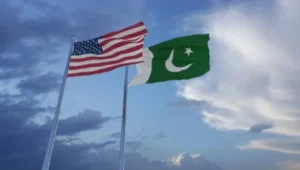
The Fulbright-HEC Scholarship is Pakistan’s dedicated Fulbright program — jointly administered by the US-Pakistan Educational Foundation and the Higher Education Commission (HEC) of Pakistan.
Why it matters for Pakistani applicants:
- The selection process is conducted in Pakistan — you compete against Pakistani applicants, not the entire international pool
- HEC provides an additional layer of local support and pre-departure preparation
- Pakistani Fulbright alumni are among the most active in the global Fulbright network
- The program has a strong track record of funding PhD students in STEM and social sciences
How to apply: Visit fulbright.org.pk for current guidelines, deadlines, and the application portal. The deadline for Pakistani students is typically in May — confirm the exact date on the website.
Additional HEC support: HEC sometimes provides bridging support for Fulbright applicants — including information sessions, writing workshops, and alumni mentoring. Check hec.gov.pk for current offerings.
Fulbright vs Other Major Scholarships
| Feature | Fulbright | Chevening | DAAD | Gates Cambridge |
|---|---|---|---|---|
| Country | USA | UK | Germany | UK (Cambridge) |
| Level | Master’s/PhD | Master’s only | Master’s/PhD | PhD primarily |
| Work Experience | Not required | 2 years required | Not required | Not required |
| Min GPA | ~3.5 | ~3.2 | ~3.0 | ~3.8 |
| University Choice | Fulbright places you | You choose | You choose | Cambridge only |
| English Test | TOEFL preferred | IELTS 6.5 | MOI accepted | IELTS 7.5 |
| Essays Required | 2 | 4 | 1 (motivation letter) | 1 |
| PhD Funded | ✅ Yes | ❌ No | ✅ Yes | ✅ Yes |
Common Fulbright Application Mistakes
Treating the two essays as one The personal statement and study objective serve different purposes. The personal statement is your story. The study objective is your research plan. Mixing them — writing a personal narrative in your study objective or making the personal statement too academic — weakens both.
Vague return impact “I will contribute to development in my country” is the most common phrase in rejected Fulbright applications. Replace it with a specific organization, a specific project, and a specific timeline.
Not using TOEFL Many applicants submit IELTS scores for Fulbright because they have already taken IELTS for other scholarships. Fulbright uses TOEFL as its primary English assessment — take TOEFL specifically for this application.
Three similar reference letters Three letters from three professors who all say the same things add up to one strong letter. Choose referees who can speak to different aspects of your profile — academic ability, research potential, and professional character.
Applying too late to contact professors For PhD applicants, connecting with a potential US supervisor before submitting significantly strengthens your study objective. Start outreach 3–4 months before the deadline.
FAQ — Fulbright Scholarship 2026
Q: Can Pakistani students apply for Fulbright?
Yes — Pakistan has one of the strongest Fulbright programs in Asia. Pakistani students apply through the Fulbright-HEC program at fulbright.org.pk, which has a dedicated selection process within Pakistan.
Q: Is work experience required for Fulbright?
No — unlike Chevening, Fulbright does not have a minimum work experience requirement. Relevant professional experience strengthens your application but is not mandatory.
Q: What GPA do I need for Fulbright?
The minimum is approximately 3.5/4.0. The pool is competitive — strong applicants typically have 3.7+ GPAs. However, exceptional research experience or professional background can compensate for a GPA closer to the minimum.
Q: Do I choose my university or does Fulbright choose for me?
Fulbright places you at a US university appropriate for your field. You can express preferences in your application — and contacting professors at preferred universities helps — but the final placement is determined by Fulbright.
Q: Can I apply for Fulbright and Chevening at the same time?
Yes — and you should. Apply to multiple scholarships simultaneously. Fulbright and Chevening have different deadlines, different criteria, and different geographic focuses. A strong applicant for one is often competitive for both.
Q: How long does the full Fulbright process take?
From application to departure is typically 12–18 months. Submit in May–July, receive notification in December–February, depart the following August–September.
Q: Is IELTS accepted for Fulbright?
TOEFL is Fulbright’s primary English test. IELTS may be accepted at specific US universities after placement, but TOEFL is strongly recommended for the Fulbright application itself.
Q: What happens if I fail to return to my home country after Fulbright?
Fulbright scholars sign a two-year home residency requirement. Failure to comply can result in ineligibility for US government-funded exchange programs in the future. It is a legal commitment — take it seriously.
Start Your Fulbright Application
Fulbright is one of the most life-changing scholarships in the world — not just for the degree, but for the network, the experience, and what it signals about your potential.
The application is demanding — two strong essays, three reference letters, and a clear research plan all take time to develop properly. Start at least 6 months before your country’s deadline.
Use our Eligibility Checker to confirm your profile matches Fulbright’s requirements, and check our Deadlines Calendar for your country’s specific Fulbright deadline.
👉 Browse All Scholarships 👉 Check Your Eligibility 👉 How to Write a Winning SOP 👉 Scholarship Reference Letter Guide 👉 Scholarship Interview Preparation Guide 👉 View All Deadlines